


The San Polo district is located right in the heart of Venice and, despite being the smallest of the six sestieri, it is also one of the most frequented by Venetians. What makes this neighborhood special are its many artisan workshops and, at the same time, the numerous small traditional wine bars known as bacari, which represent a true institution for food lovers.

10 things to see in the San Polo district of Venice
We’ve created a short walking itinerary that will allow you to cross the entire San Polo district of Venice, guiding you to discover 10 attractions that we recommend not missing. Where does it start? An easy starting point to reach both on foot and by vaporetto: the Rialto Bridge.
1. Rialto Bridge
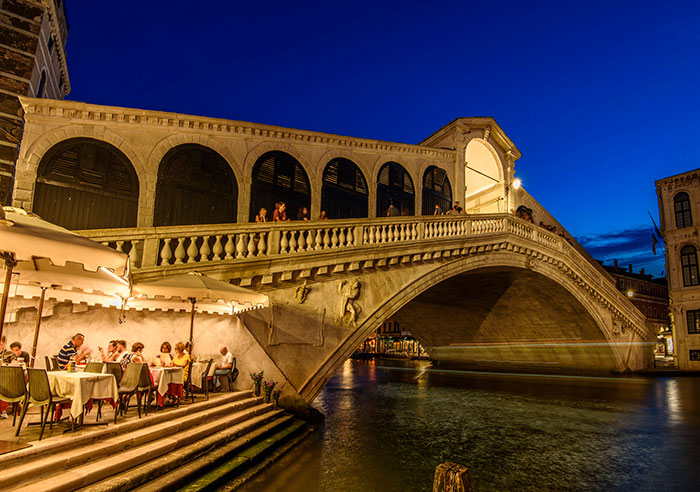
Among the bridges of Venice, the most famous and certainly the most photographed of all is the Rialto Bridge, the only one that until the last century allowed pedestrians to cross the Grand Canal, connecting the San Polo district with San Marco. Built entirely of stone after a long history of wooden bridges collapsing into the canal, this bridge is an extraordinary feat of engineering and architecture, measuring 48 meters in length and 22 meters in width.
Every day, thousands of visitors stop here to take photos of the magnificent view that opens up from the ramps and from the top of the bridge.
2. Rialto Market
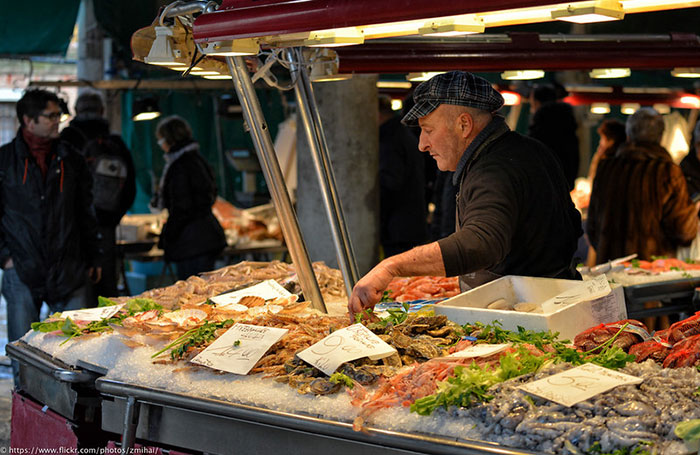
Open every day (except Sundays and Mondays) from 7:30 a.m. to 12:30 p.m., this is one of the most characteristic neighborhood markets in Venice. Colors, scents, flavors, and a lively mix of voices make the atmosphere truly vibrant and authentic. We recommend taking a walk among the fish stalls at the Loggia della Pescheria and the fruit and vegetable stands in Campo Erbaria, in what is considered one of the oldest markets in Italy—its origins are said to date back as far as the year 1000.
3. Campo Erbaria

We’re not just in the “produce area” of the market. Campo Erbaria is famous because it’s packed with bars and bacari where you can sample a wide variety of traditional Venetian dishes. If you’re wondering where to eat in San Polo, Venice, in the next section we’ll show you some of the most popular spots among young Venetians—places where the food is genuinely excellent.
Be sure to try the cicchetti served in bacari: small, single-portion bites that define the lagoon’s street food, featuring all the local specialties. Give them a try!
5. Ponte delle Tette
During the time of the Serenissima Republic of Venice, the city also had its own red-light district. The entire area between the San Polo and Santa Croce districts was filled with houses of tolerance, and right above this small bridge was one of the spots where prostitutes would lean out of their windows and attract passing clients by exposing their breasts.

Today, it is simply a pedestrian bridge, allowing us to reach the next stop on our walking itinerary.
5. Campo San Polo
It is the largest campo in Venice, excluding St. Mark’s Square—which is considered a square and not a campo. Campo San Polo takes its name from the Church of San Polo (Saint Paul), located on the southern side of the square. The central well is over 500 years old, and the importance of this large urban space grew so much that in the 1600s the city’s famous market for the poor was moved here.
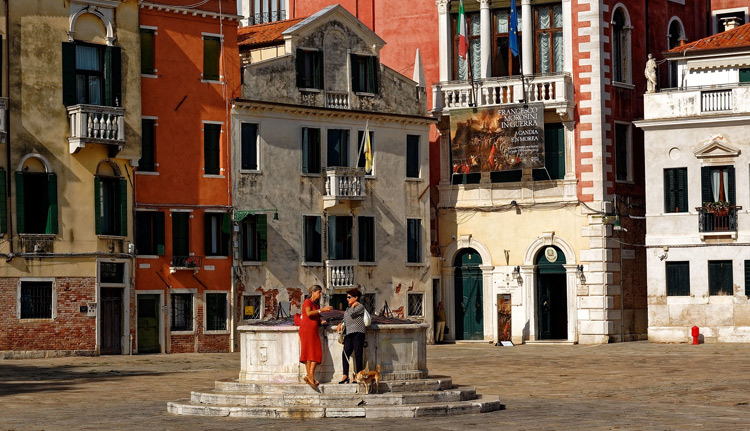
In the past, all the city’s main public games were held here, making it the city’s primary place for leisure and social life. However, due to complaints from nearby residents, all recreational activities were eventually banned. Walking through Campo San Polo today, you’re instead captivated by the beauty and charm of the historic noble residences that overlook the square.
6. Scuola Grande di San Giovanni Evangelista
For over seven centuries, this complex has been home to the Confraternity of San Giovanni Evangelista. Inside, it houses masterpieces by artists such as Tintoretto, Palma il Giovane, Longhi, and many others.

The building boasts more than 600 years of history and today hosts an interesting museum complex open to the public, dedicated to art and architecture ranging from Gothic to Venetian Baroque. Concerts and events are frequently held here, creating a cultural calendar rich with artistic highlights.
To learn more, book your visit, or join a guided tour, you can visit the official website of the Scuola Grande di San Giovanni.
7. Basilica dei Frari
Its full name is the Basilica of Santa Maria Gloriosa dei Frari, and it is one of the largest and most famous churches in Venice. The structure rests on twelve imposing columns—twelve, just like the number of the Apostles.

The Basilica and its bell tower are masterpieces of architecture whose origins date back as far as the 13th century. Inside, you’ll find sculptures and paintings of extraordinary beauty, including works by Antonio Canova, Bellini, Titian, and a famous 13th-century crucifix. The church also houses the tombs of notable figures such as Titian himself and the celebrated Tomb of Canova.
If you plan to pass through the San Polo district, the Basilica dei Frari is an absolute must-see.
8. Church of San Rocco
Less than a two-minute walk from the Basilica dei Frari, you’ll find another church we highly recommend visiting. We are here in Campo San Rocco, facing a church that dates back to the late 15th century.

The current façade preserves only a few elements of the original structure, as restoration work carried out in the 18th century significantly altered its appearance. The four side niches, visible in the photo, house sculptures of four different Venetian saints, while the central niche features a sculpture dedicated to Saint Roch, much revered by worshippers.
Don’t miss the stunning 18th-century organ and the frescoes decorating the interior walls, with works by Tintoretto, Giovanni Antonio Fumiani, Sebastiano Ricci, and many other Venetian painters.
9. Scuola Grande di San Rocco
The Church of San Rocco was commissioned by the members of the Scuola Grande di San Rocco themselves, who—just a short walk from the Frari—wanted a place of worship dedicated to their patron saint. The Scuola Grande is a lay confraternity dating back to the late 15th century and today houses around 60 paintings, creating a remarkable fusion of art, architecture, and spirituality.

Tintoretto is undoubtedly the central figure here, with his biblical scenes covering the walls of the building. However, works by artists such as Giorgione, Tiepolo, and Lo Scalzone are also on display. Don’t miss the Treasury Room.
10. Carlo Goldoni's House
This is where the celebrated playwright Carlo Goldoni was born in 1707. Today, the house is a museum offering an experience entirely built around the author’s narrative style. Even the educational visit is structured around the concept of suspense, a technique Goldoni mastered like few others.

The atmosphere is intentionally nostalgic, recreating what was a century marked by extravagance and luxury—one that ultimately led to the fall of the Republic of Venice. Don’t miss the small theater featuring original 18th-century marionettes.
Where to eat in San Polo, Venice
We’re in one of Venice’s districts most frequented by locals looking to enjoy a good meal based on traditional specialties: creamed cod, sweet-and-sour sardines, bigoli in sauce, all perfectly paired with a glass of local wine. So, where can you eat well?

Hostaria Osottoosopra
This spot is actually located in the Dorsoduro district of Venice, just a short walk from the southern edge of San Polo. It’s about a 10-minute walk from the station and offers traditional dishes at a fair price.
Osteria Fanal del Codega
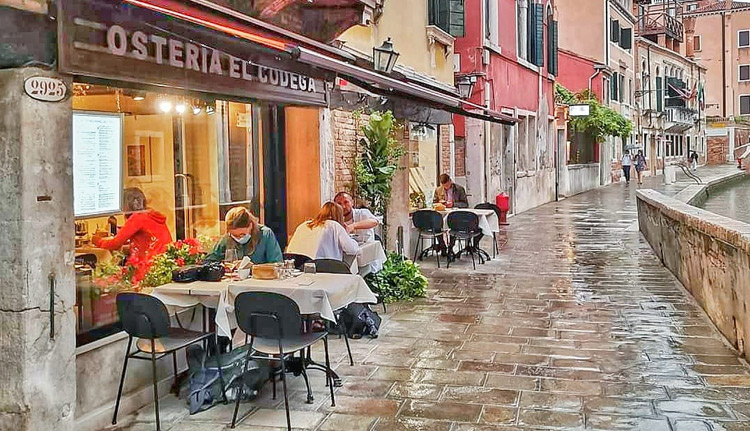
Located right along Fondamenta del Forner, this is a very characteristic restaurant that won us over both for its quality and its value for money.

Ristorante Wistèria
A refined restaurant offering outstanding local tasting menus paired with some of the finest wine selections. Beautifully curated interiors make it the perfect choice for a special occasion.
Transparency note: some links in this article are affiliate links. We may earn a small commission at no extra cost to you. We collaborate with partners such as GetYourGuide to suggest useful experiences for travelers.


