


Venice districts define the city’s historic neighborhoods and shape the structure of the lagoon city. There are six districts in total, each with its own personality, history, and atmosphere, all contributing to Venice’s rich cultural identity. In this guide, we’ll explore the distinctive characteristics of each Venice district, the main places to visit, and the role each area plays in shaping the identity of this extraordinary city on the lagoon.

What are the 6 districts of Venice called?
Here they are listed: San Marco, Cannaregio, Dorsoduro, Castello, Santa Croce, and San Polo. There are six districts in total, and each one offers a unique perspective on the charm and complexity of this centuries-old city.
Further reading: what to see in Venice
What are Venetian districts and why are they called “sestieri”?
They are the historic neighborhoods of Venice and divide the city into clearly defined areas. The subdivision into districts dates back to the Middle Ages and literally means “division into six parts”. Each district originally represented an administrative and territorial division. The exact origin of their names is not always clear, but they are often linked to places of worship, patron saints, or geographical features that historically characterized each area.
An interesting and little-known detail: house numbers in Venice
Anyone who has walked around Venice knows how complex its system of calli and campi can be. A maze of canals and small bridges where house numbers often consist of four digits. This system is known as the Theresian numbering system, a method of house numbering introduced by Empress Maria Theresa of Austria in the 18th century to make public services easier to manage and to clearly identify homes and businesses.
Before this system was introduced, houses in Venice’s districts were often identified by names or symbols, making the city a true labyrinth where getting lost was almost inevitable. Even today, finding an address is not always straightforward: the Theresian numbering system does not follow a linear order but is instead based on the various calli and campi within each district.
Venice districts and their unique characteristics
San Marco district
San Marco is the beating heart of the lagoon and one of the most iconic places in the world. Art, history, and culture come together here, with countless landmarks worth visiting. The undisputed focal point is St. Mark’s Square, dominated by the majestic St. Mark’s Basilica (Basilica di San Marco), also known as the “Golden Cathedral” thanks to its extraordinary golden mosaics. It is impossible not to notice the tallest tower in Venice, the St. Mark’s Campanile, which rises nearly 100 meters above the city. The bell tower is open to visitors and offers breathtaking panoramic views over the lagoon and rooftops of Venice.

Not to be missed is the Doge’s Palace (Palazzo Ducale), the former residence of the Doge and one of the most emblematic buildings of Venice. For centuries, it was the very center of political power during the time of the Serenissima Republic. The palace is a place of striking contrasts: inside, you will find magnificent state rooms that once hosted princes, diplomats, and rulers from all over the world, but also the infamous prisons and torture chambers that reveal the darker side of Venetian justice.
Want to learn more? Discover everything there is to see starting from St. Mark’s Square.
San Polo district
San Polo developed around the historic Rialto Bridge, which was originally the only bridge allowing people to cross the Grand Canal. This area is home to one of the oldest churches in Venice, the Church of San Giacomo di Rialto, dating back to the 11th century. Its façade is still dominated today by the magnificent clock, a well-known landmark of the Rialto area.

In the San Polo district, we highly recommend a scenic walk through the Rialto Market, where Venetians go every day to buy fresh fruit and vegetables, as well as fish from the dedicated fish market known as the Pescheria. San Polo is one of the most lively districts among locals, thanks to its many historic taverns and wine bars - known as bacari - where you can enjoy cicchetti and ombre de vin, a deeply rooted Venetian tradition. Never heard of them before? Discover what cicchetti are and why they are such an essential part of Venetian food culture.
Discover everything there is to see in the San Polo district
Dorsoduro District

Dorsoduro is renowned for its elegance and its vibrant artistic scene. One must-see attraction is the Peggy Guggenheim Collection, housed in a charming palace overlooking the Grand Canal. This modern and contemporary art museum hosts an outstanding collection of works by some of the most influential artists of the 20th century. Dorsoduro is also famous for its bacari, lively wine bars that attract both locals and visitors every day, whether for a casual aperitivo or a quick bite. Another major highlight is the Gallerie dell’Accademia, an art gallery boasting an extraordinary collection of Venetian paintings from the 14th to the 18th century. Here, visitors can admire masterpieces by artists such as Bellini, Tintoretto, and Tiziano. Do not miss a walk to the nearby Giudecca Island, a quieter area offering a different perspective on Venice.
Explore everything there is to see in the Dorsoduro district
Cannaregio Venice
Quartiere più tranquillo e “autentico”, ospita al suo interno il Ghetto Ebraico, un’area storica in cui fu segregata la comunità ebraica dal XVI al XVIII secolo. Qui si trovano ancora oggi cinque sinagoghe, tra cui la Sinagoga Scola Grande Tedesca, la Sinagoga Scola Canton e la Sinagoga Spagnola, che rappresentano importanti testimonianze storiche della presenza ebraica a Venezia.
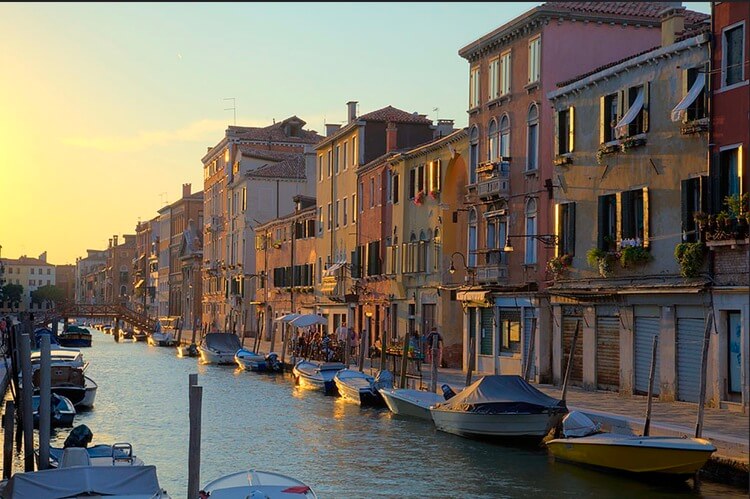
Cannaregio is considered one of the most peaceful and authentic neighborhoods in Venice. It is home to the Jewish Ghetto, a historic area where the Jewish community was segregated between the 16th and the 18th centuries. Today, the district still preserves five synagogues, including the Great German Synagogue, the Canton Synagogue, and the Spanish Synagogue, which stand as important historical testimonies of Jewish life in Venice.
Cannaregio is an authentic area where visitors can truly experience everyday Venetian life, far from the most crowded tourist zones. It is also conveniently located near Venice Santa Lucia train station, making it easily accessible for travelers. Walking through its streets, you can admire beautiful palaces, churches, and squares, including Campo dei Mori, famous for the statue of the Gobbo di Rialto.
The district is also known for its excellent restaurants and bars, where you can enjoy traditional Venetian cuisine in a relaxed and local atmosphere.
Discover everything there is to see in Cannaregio, Venice
Castello District
A must-see highlight of the Castello district is the famous Venice Biennale, a vast complex of both open-air and indoor exhibition spaces dedicated to contemporary art. During the Biennale, this area transforms into a vibrant hub of creativity and innovation. The visit naturally continues in the renowned Giardini della Biennale, where art, culture, and nature come together in a unique setting.

Castello is especially recommended during the warmer months, as it is a relatively quieter area and its green spaces help soften the summer heat. One of the district’s key landmarks is the Arsenale, a historic shipyard complex that absolutely deserves a visit. This ancient naval yard offers a powerful glimpse into Venice’s maritime dominance and seafaring legacy. At the Naval History Museum, visitors can explore the rich history of the Venetian navy and admire an extensive collection of ships, models, and naval artifacts. Finally, a walk along the Riva degli Schiavoni is a must, offering some of the most beautiful and iconic views over the Venetian lagoon.
Santa Croce District
Santa Croce is one of the least touristy districts in Venice, yet it is an area that almost everyone passes through. This is where Piazzale Roma is located, home to the city’s main bus terminal. It is also the last part of Venice that can be accessed by car (remember that cars are not allowed anywhere else in the city). That said, the eastern side of Santa Croce still offers a pleasant atmosphere, where it is easy to wander through quieter streets and admire traditional Venetian houses, far from the crowds.
A journey toward the heart of Venice
In conclusion, the Venice districts are like the pieces of a fascinating mosaic that together form the unique identity of this lagoon city. From San Marco to Cannaregio, from Dorsoduro to Castello, and from Santa Croce to San Polo, each district holds centuries-old stories, hidden corners, and traditions woven through narrow streets and canals.
Walking across the districts of Venice is like traveling through time — a journey that reveals the many layers of the city’s art, culture, and everyday life. With its unexpected details, remarkable architecture, and deep historical roots, each district offers a unique and memorable experience. Taken together, the Venice districts represent the true soul of the city, and anyone fortunate enough to explore them will discover a beauty that goes far beyond appearances, revealing the authentic essence of Venice.
Discover our one-day itinerary: what to see in Venice in one day
Transparency note: some links in this article are affiliate links. We may earn a small commission at no extra cost to you. We collaborate with partners such as GetYourGuide to suggest useful experiences for travelers.


