

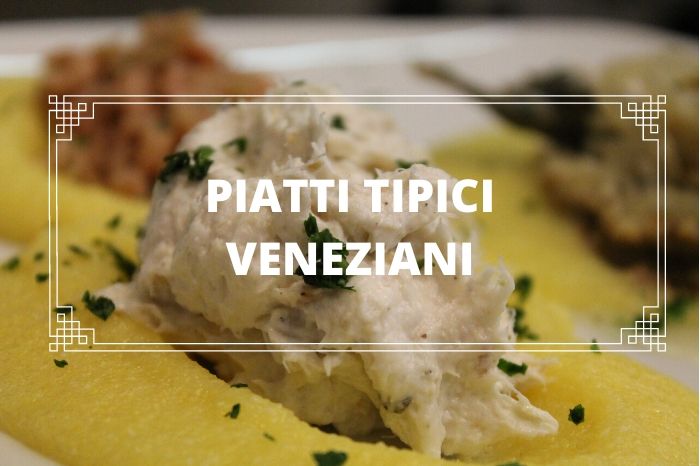
In questa guida troverai una lista dei piatti tipici veneziani, quelli da assaggiare almeno una volta se ti trovi a Venezia o dintorni. Dai risotti ai primi fino ai dolci, ecco quale cibo tipico si può assaggiare nelle tradizionali trattorie veneziane. Ecco dunque cosa mangiare a Venezia.
Venice is not just St. Mark’s Square, vaporetto rides, tourists, and canals. For those willing to explore beyond the crowds, Venice is a city with unique stories to tell — stories of the sea, of its people, and of centuries-old traditions (including cicchetti).
A seafaring people who adapted their cuisine to long Mediterranean journeys. That’s exactly why many traditional Venetian dishes are quick and seafood-based — because fish was always readily available — or designed to be preserved over time.
Many of these culinary traditions can still be enjoyed today in select restaurants and in traditional bacari in Venice. If you’re planning a visit, we recommend joining a tour through these historic and colorful Venetian taverns.
What to eat in Venice
Before diving into Venetian dishes and specialties, we need to introduce the cornerstone of local cuisine: polenta.
Polenta
Polenta is practically always present in traditional Venetian dishes. Once considered a humble food, it pairs beautifully with fish, meat, vegetables, and cheese.

La polenta arrivò sulle tavole della laguna del 1500 dalle Americhe e rivoluzionò la dieta dei locali, una volta basata sui cereali. Ne esistono di diversi tipi: la gialla tradizionale preparata con la farina di mais, quella bianca, preparata con la farina di mais bianco, molto utilizzata anche nella provincia di Treviso. C’è anche chi prepara la polenta con la farina integrale o con la farina di grano saraceno.
Traditional first courses in Venice
Bigoli in salsa
Bigoli are handmade pasta similar to thick spaghetti, with a rough and highly porous surface. That texture is exactly what makes them perfect for pairing with sauce.

Bigoli are a specialty throughout the Veneto region, often served with meat ragù but especially with fish. One of the most traditional Venetian holiday dishes is precisely bigoli in salsa. The sauce is made with onions and anchovies slowly melted in extra virgin olive oil.
Bigoli are made with wheat flour or whole wheat flour — in the latter case they are called bigoli mori — and must be about 2 millimeters thick. Compared to traditional spaghetti, the pasta has a firmer texture, and the real secret lies in the creamy anchovy and onion sauce.
Bigoli with duck
This is the meat-based version for those who don’t love onions. It’s a slow-cooked ragù made with minced duck breast.
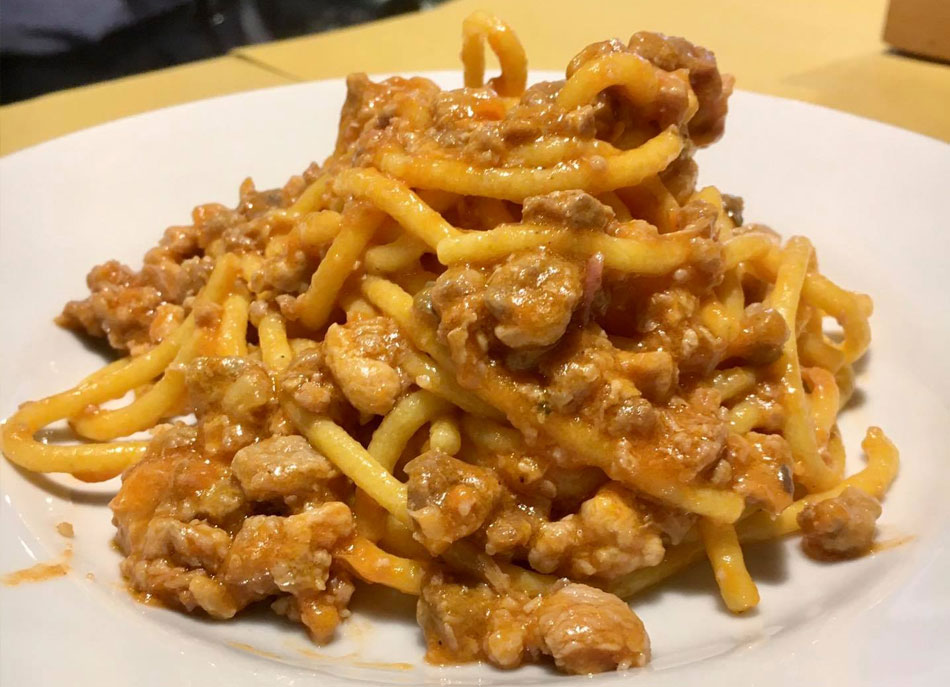
With a generous sprinkle of grated cheese — or even better, some well-aged mountain cheese produced in the Veneto region — this pasta truly has no rivals.
Risotto de gò
Risotto de gò is one of the most typical dishes of Venice and the surrounding area. It’s prepared with goby fish, a species found in the lagoon and still sold today at the Chioggia fish market.

Even though goby isn’t the most attractive fish to look at, it’s used to prepare a delicious risotto that Venetians consider a true delicacy. It pairs beautifully with white wines, another regional specialty locals are proud of.
Risi e bisi
A traditional dish from across the Veneto region, with many variations. It is neither exactly a risotto nor a soup, since it is not prepared using the classic rice-toasting method typical of Lombardy.

This dish was already being prepared in the 1500s on April 25th, during the feast of Saint Mark, the patron saint of Venice. Some make it with broth, others with pancetta, others with cheese. It remains — and always will be — delicious.
Scampi alla busara
In Italian, they are called scampi alla busara, a dish not originally from Venice but from the Istrian and Rijeka areas. Today, this extraordinary recipe is prepared throughout the northern Adriatic coast.
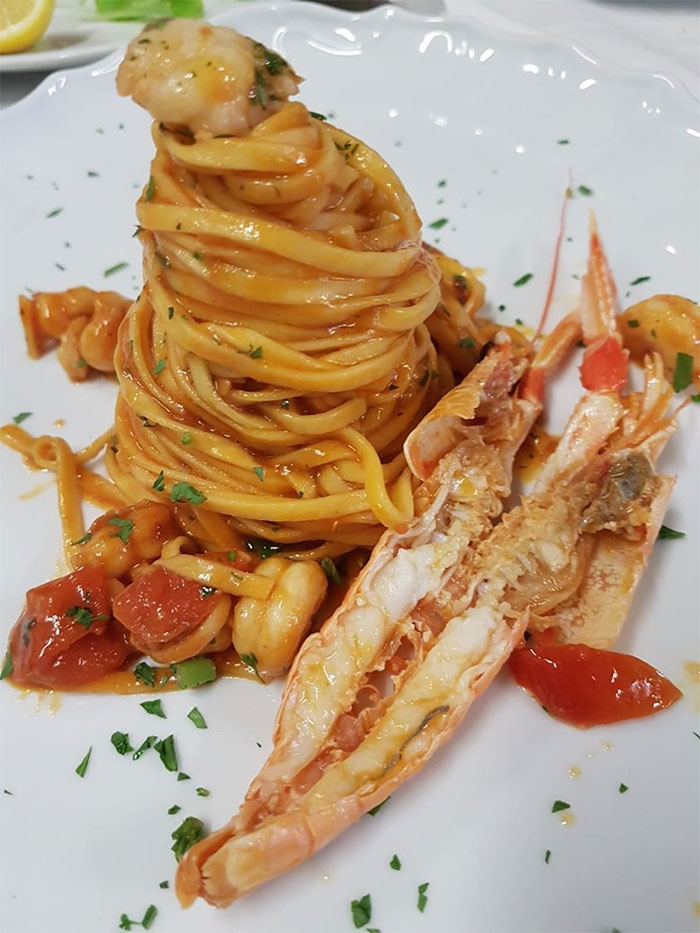
The name may derive from the Croatian word buzara, referring to the large pot in which the scampi were cooked. Another theory suggests the dish was prepared using leftover or unsold shellfish, turning what was once considered a humble dish into a delicacy. The term busara may also derive from “busaria,” meaning “trick” or “deception.”
Excellent both as a first course and as a main dish, they are the perfect pairing for good long pasta, ideally handmade spaghetti or linguine.
Traditional Venetian Main Courses
Baccalà mantecato
It may sound unbelievable, but baccalà mantecato, whose recipe is now more than 500 years old, owes its origins to a storm. In 1432, the merchant Pietro Querini was sailing near the Arctic Circle and eventually found refuge on an island in what is now Norway.

Locals survived on a peculiar fish that was dried under the pale northern sun and had excellent preservation qualities. That “stock” fish was precisely stockfish.
Fegato alla veneziana
In dialetto lo chiamano fegà àea venessiana. Si tratta di una ricetta abbastanza veloce che sfrutta la caramellizzazione della cipolla che, in fase di cottura, tende a diventare dolce.

The preparation is simple: white onions — traditionally those from Chioggia — are cooked slowly for about 15–20 minutes. The liver is then quickly seared, and its strong, rich flavor balances the sweetness of the onions.
Sarde in saor
Let’s admit it: traditional Venetian cuisine loves onions. And in this dish, they take center stage, perfectly paired with fish.

It’s a humble Venetian recipe made with lots — really lots — of onions and sardines, an oily fish rich in omega-3s. An affordable delicacy you can enjoy year-round. A small secret: once prepared, it should rest for a couple of days to fully develop its flavor.
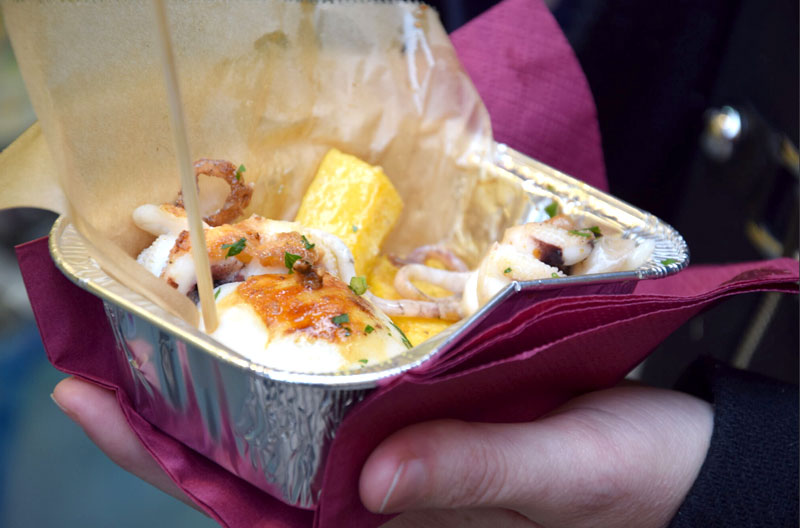
Schie with polenta
In Venetian dialect, schie are tiny lagoon shrimp. They are typically served over white polenta and have an exceptionally delicate yet distinctive flavor.

Le schie con la polenta sono un piatto tipico veneziano povero ma gustoso. Sono ottime sia come antipasto che come pasto completo. Ottimo il contrasto tra la polenta, più neutrale, e questi piccoli gamberetti dal sapore molto intenso di mare. Un contrasto che siamo sicuri amerete, provare per credere!
Le Moeche
Le moeche sono i granchi verdi che si trovano nella laguna, un segreto custodito per secoli dai pescatori di Burano e di Chioggia.

Durante la primavera e l’autunno i granchi fanno la muta, cioè perdono il guscio restando per un breve periodo indifesi. E’ proprio in questo momento che i pescatori li raccolgono, anche quando il nuovo carapace è ancora molle. Per questo venivano chiamati “mollecche”, da cui “moeche”.
Questo segreto venne svelato solo nel secondo dopo guerra alle nobili famiglie della Giudecca Island per diffondersi poi in tutta la laguna. Oggi le moeche sono un patrimonio da difendere, un presidio slow food. La ricetta è semplicissima: si infarinano e si friggono.
Desserts and Pastries
You may notice that Venetian pastry traditions are especially rich in cookies. This is because, in the past, men often traveled by sea and needed food that would keep well over time. In addition, Venetian nobles loved enjoying tea with biscuits. And so were born the traditional Venetian desserts.
Baicoli
Baicoli are traditional Venetian dry cookies. They originated from the need to transport something sweet and tasty aboard merchant ships — a crunchy dessert for sailors that wouldn’t spoil easily.

Baicoli are traditional Venetian dry cookies, which also became popular among the noblewomen of the Serenissima Republic, as they paired perfectly with tea.
The recipe is based on a few simple yet high-quality ingredients: flour, butter, sugar, and egg whites. The secret to their crunch? Double baking and a long preparation process that allows the dough to mature.
Zaeti
In Venetian dialect, the word “zaeti” means “yellowish” and refers to a type of slightly spiced cookies traditionally prepared in Venice during the fall.

Perfect for breakfast or an afternoon snack, they are ideal for dipping into milk, coffee, or tea. These cookies actually originated in the mountain area of Veneto, where a very fine cornmeal is produced — also well suited for pastry-making.
Among the ingredients are 00 flour, cornmeal, eggs, butter, raisins, and lemon zest. It is precisely the cornmeal that gives them not only crunchiness but also a slightly grainy texture. They are even mentioned in the culinary writings of Artusi.
Venetian Fritole
Traditional Venetian dishes are often associated with specific events or times of the year. For example, during the Carnival of Venice, small sweet fritters are prepared. Their history is very ancient: as early as the 1300s there seems to have been a professional guild of fritole makers, called “fritoleri,” whose craft was passed down from father to son during the Renaissance.

In the original recipe, these small fried balls contain raisins, flour, sugar, pine nuts, milk, and yeast. The raisins, to enhance their stronger and slightly spiced flavor, are soaked in water and grappa. The taste is irresistible — one leads to another.
Bussolà from Burano
The bussolà from Burano is one of the delicacies Venetians are most proud of. It’s a vanilla-flavored cookie traditionally prepared during the Easter season and once wrapped in linen so that its buttery aroma would perfume everything.

They have a slightly yellow color thanks to the high presence of egg yolks. These little treats are incredibly tasty — and slightly addictive 🙂
Transparency note: some links in this article are affiliate links. We may earn a small commission at no extra cost to you. We collaborate with partners such as GetYourGuide to suggest useful experiences for travelers.


molto utili le informazioni per chi sta facendo una ricerca sui cibi tipici veneziani
Buongiorno gineppina,
ti consiglio di leggere anche la nostra guida allo street food di Venezia. Lo troverai di ispirazione, soprattutto se dovessi venire in città 🙂
Veneziaaaa?Città incantevole,dove tutto si miscela in un’atmosfera romantica tra il profumo che arriva dal mare e i calli stretti e consumati dal tempo dove le mura delle case e dei palazzi raccontano la storia ed il proprio vissuto,anche quello profuma.Incantevole nei suoi passaggi quasi segreti-Adoro Venezia
Venezia è da sempre la mia città preferita e unica. C’è sempre qualcosa da scoprire e sicuramente offre tanto a chi ci vive, chi viene da altre città e agli stranieri. Bisognerebbe rispettarla di più proprio per la sua unicità