

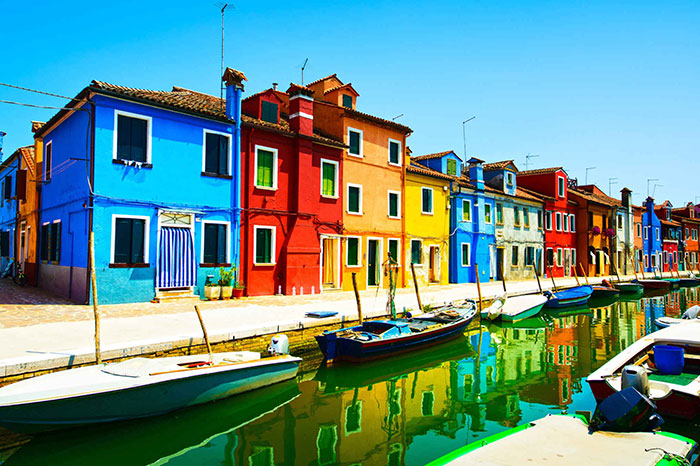
What to see in Murano? In short: the glass furnaces and blown-glass shops, the Basilica of Santa Maria and Donato, the Murano Glass Museum, Fondamenta dei Vetrai, and the lighthouse. These are the stops that best tell the story of the island, that colorful gem of the lagoon where the art of glass is still passed down today among quiet canals and calli.
With half a day you can cover the essentials without rushing; if you have a full day, treat yourself to a glassblowing demonstration, the museum, and a slow lunch at an osteria. Below is the itinerary we use when we take someone to visit Murano for the first time, with ideas for free things to do and how to pair it with Burano or Torcello.
How long you need and a half-day itinerary
For what to see in Murano in a few hours, three or four hours on foot is plenty. Hop off the vaporetto, follow Fondamenta dei Vetrai, step into the basilica if it is open (and if you booked ahead), pause at the Glass Comet, then finish toward the lighthouse or the museum, depending on how much walking you still feel like.
If you have a full day, the pace changes: you can add glassblowing at a furnace, the Murano Glass Museum, and a leisurely lunch. A well-paced half day, the one we recommend most often, follows this thread:
- Arrive at Colonna or Navagero
- Walk Fondamenta dei Vetrai and do a little shopping with the authentic trademark
- Basilica of Santa Maria and Donato
- Campo Santo Stefano with the Glass Comet
- Murano Glass Museum or the lighthouse, whichever calls to you more
9 things to see in Murano
On Murano it is always worth getting a little lost among the calli. If it is your first time, though, these nine stops give you a clear thread without taking away the joy of wandering.
1 – Where to watch glassblowing
Things to do in Murano if you want a real memory to take home? Watch glassblowing live. Glass shops are everywhere, but getting into a working furnace is not a given: for safety, many stay closed to the public. We visited Vetreria Artistica Colleoni and were genuinely amazed: the master at the furnace, glass taking shape in minutes, and even the chance to try a hands-on workshop. More than anything else, this is the experience that tells the island’s soul.
For hours, tickets, and how to reach the furnace (Murano Faro stop), you will find everything in our guide to a Murano glass factory visit.
If you buy something, look for the official Vetro Artistico® Murano trademark: it is the simplest way to tell an authentic piece from an imitation.
2 – Basilica of Santa Maria and Donato
Murano’s cathedral is one of the oldest churches in the lagoon, and the moment you step inside you understand why it is worth a stop. The 12th-century mosaic floor and the polychrome glass pastes alone are enough to leave you speechless. It holds the relics of Saint Donatus and, behind the altar, the bones of the “dragon” from local legend: a detail kids (and not only kids) always love to hear.

A booking at a symbolic cost is usually required. Before you go, check the amount and how to book on the parish’s official page (or the site listed on site): the rules can change.
3 – Murano Glass Museum
Inside Palazzo Giustinian, the Murano Glass Museum is the right stop if you want to understand what you are looking at in the shops, not only to buy. It walks you from ancient techniques to today’s experiments, on a colorful path that bridges craft and art.
Up-to-date hours and ticket prices are always on the official MUVE pages (opening hours and tickets). In peak season, booking online saves you pointless queues.
4 – Fondamenta dei Vetrai
Fondamenta dei Vetrai is Murano’s most iconic walk: the canal, the bridges, the shops, and the historic furnaces facing the water. Get off at Colonna or Navagero (lines 4.1 / 4.2) and start here: it is the most natural way to catch the island’s rhythm on your first arrival.
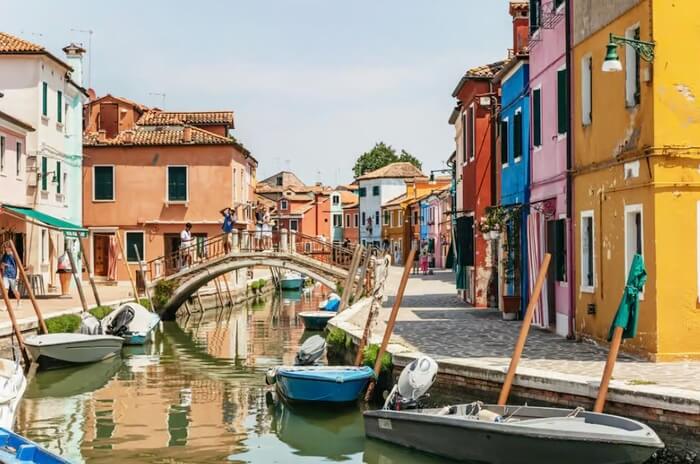
At the end of the promenade you can either head toward the Glass Museum or continue to the lighthouse area (Faro) for panoramic lagoon views and, in mid‑season on clear days, an unforgettable sunset.
5 – Murano lighthouse: what to see and why it is worth it
The Murano lighthouse is that white landmark you already recognize from the vaporetto, before you even step ashore. It is not a museum to “do inside” like a basilica: what counts is the lagoon view, the feel around the Faro stop, and, on fair days, the late-afternoon light. If you continue from Murano to Burano or Torcello, you often leave again from here on line 12.
And if your main goal is the Colleoni furnace, getting off at Faro is also the most convenient choice.
6 – Church of San Pietro Martire
At the end of Fondamenta dei Vetrai you find San Pietro Martire, rebuilt in Renaissance forms after a fire. Inside there are exposed timber beams and works linked to Bellini, Tintoretto, and Veronese. Quieter than the cathedral, it is the right refuge when you want a calmer moment between one shop and the next.

6 - Murano’s “Grand Canal”
Here too the main waterway is called the Grand Canal: it splits the island and gives you a miniature “Venetian” stroll among shops and colorful houses. If you like comparing scales, you can later reread the Grand Canal of Venice in the historic center. Same name, a completely different atmosphere.

8 – Palazzo da Mula
After the cathedral, Palazzo da Mula is among the finest façades to admire from outside: Venetian Gothic, Istrian stone, and that slightly suspended elegance of the old summer residences. Today it hosts exhibitions and cultural events (Centro della Civiltà Lagunare): it is worth checking on site what is open on the day of your visit.

9 – Campo Santo Stefano and the Glass Comet
Simone Cenedese’s Glass Comet, in Campo Santo Stefano, is the island’s most photographed installation: a burst of blue spikes that lights up in the evening and almost seems to float over the square. Golden hour and reflections after rain work especially well. It is a free, quick stop, perfect for closing the itinerary with a smile.
Free things to do in Murano
Good news: you do not need to spend to fall for Murano. What to see in Murano for free (or nearly free) is already a lot:
- The walk along Fondamenta dei Vetrai and Murano’s Grand Canal
- The façade and views of Palazzo da Mula
- Campo Santo Stefano and the Glass Comet
- The lighthouse area with lagoon views
- Shop windows (purchases are separate, of course)
You still pay for the museum, furnace demonstrations, any basilica bookings, and the vaporettos. A few furnaces hold free open days on limited dates: lovely surprises, but they remain the exception.
How to get to Murano and where to get off
To visit Murano from Venice you rely on ACTV vaporettos, and the ride is part of the charm. The most useful lines are the 3 (more direct from Piazzale Roma / the train station), the 4.1 and 4.2 (also from Fondamente Nove), and, if you want to continue to Burano and Torcello, the 12 from Murano Faro.
Where you get off makes more difference than you might think:
- Navagero or Colonna: ideal if you want to walk straight onto Fondamenta dei Vetrai
- Faro: the right choice for a glass factory or to continue toward Burano
- Museo: handy if you are heading straight to the Murano Glass Museum
Prices, ticket validity, and options (single, round trip, day passes) change over time. Start with our guide on how to get to Murano and, for travel tickets, Venice vaporetto tickets: that is where you will find details kept up to date without hunting around.
Murano or Burano?
Murano or Burano? It is the question we hear most often, and the answer depends on what you are after. Murano is the glass island: furnaces, museum, churches, and an atmosphere you discover as you go. Burano is the island of colors and lace: more photogenic, more compact, instantly recognizable. Many people do both in one day, morning on Murano and afternoon on Burano (and, if you still have energy, Torcello too).
For details on the colorful island, read what to see in Burano. If you want a wider picture of the islands of Venice, start there and build your own island-hopping plan.
What to eat in Murano
No visit to Murano is complete without tasting some of the classic dishes of Venetian cuisine in local osterie and taverns. On the island you can try specialties such as:
- il risotto di Gò: il ghiozzo è un pesce tipico della laguna, non semplicissimo da pulire e spinare, ma che permette di preparare dei risotti cremosi fantastici.
- Anguilla alla muranese – eel prepared “bisato su l’ara,” a traditional recipe born among the workers who used to labor in the glass furnaces.
- Cicchetti – bite‑sized pieces of bread topped with various Venetian specialties. This tradition was started centuries ago by sailors and merchants of the Serenissima Republic. Venezia da Esplorare has a full guide dedicated to Venetian cicchetti.
- Le ombre – an “ombra de vin” is essentially a small glass of house wine enjoyed at the counter, ideally from the Veneto region. Many visitors opt for an Aperol spritz instead, but trying local white and red wines is highly recommended.

Transparency note: some links in this article are affiliate links. We may earn a small commission at no extra cost to you. We collaborate with partners such as GetYourGuide to suggest useful experiences for travelers.


Un tesoro a pochi chilometri da Venezia, facile da raggiungere in vaporetto, credo che Burano sia davvero un luogo meritevole.
Consiglio a tutti di vedere i maestri vetrai al lavoro, io ho avuto la fortuna di vederli quand’ero piccola e mi porto il ricordo ancora nel cuore, è un vero spettacolo.
Portatevi a casa un souvenir, ma compratelo direttamente la, a Venezia se ne trovano centinaia, ma credo sia giusto acquistarli nel luogo in cui vengono prodotti!